Composting Toilets for Cabins and Off-Grid Homes
A composting toilet lets you skip the septic tank and save water. We carry the Sun-Mar lineup, from the portable GTG to central Centrex systems that can serve more than one bathroom. The guide below the products compares self-contained and central models, electric and non-electric versions, and sizes for every household.


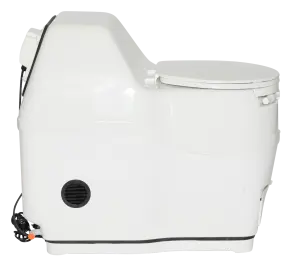


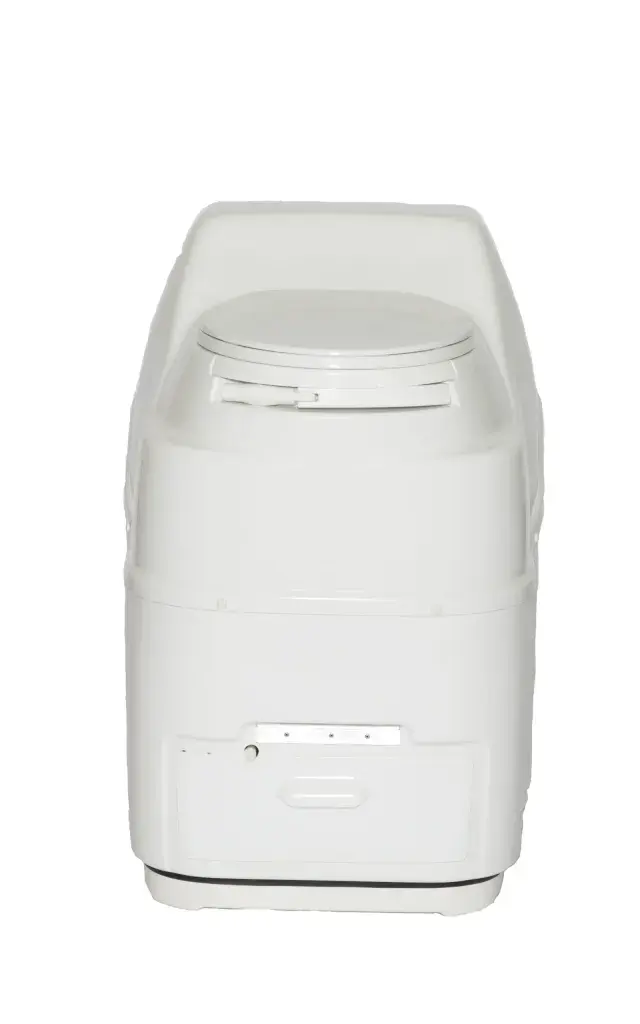


Self-contained or central system?
A self-contained toilet does everything in one unit, right in the bathroom. The Sun-Mar Excel, Excel NE, Compact and Spacesaver work this way, with no plumbing required. They suit cabins, tiny homes and tight spaces.
A central system splits the job in two. A conventional-looking toilet sits in the bathroom and the composting unit is housed separately. The Centrex 1000, 2000 and 3000 work with ultra-low flush or waterless toilets, and the Centrex 2000 and 3000 can connect to more than one toilet, which helps in a larger home.
The GTG takes another approach. It is a compact urine-diverting toilet that separates liquids and solids and needs no water or plumbing. It fits vans, tiny homes and minimalist cabins.
Electric or non-electric?
Electric models use power to help get rid of liquid. The Excel has an electric fan and heater for liquid evaporation, and the Compact also uses electric operation for evaporation. On the Spacesaver, evaporation is more limited, so a drainage setup may be required.
Non-electric (NE) models need no power. The Excel NE relies on natural airflow through a vent stack, which makes sense for a remote camp. Each Centrex model also comes in an electric and an NE version. On solar, an NE model leaves your batteries alone, while an electric model needs room in your power budget. Our solar sizing calculator can help you check.
Sizing for your household and season
1 to 3 users: the Compact is a medium-capacity model for this range.
Up to about 5 users: the Centrex 1000, Sun-Mar's entry-level central system.
Family use: the Excel and Excel NE are high-capacity self-contained models.
Full-time homes and heavy use: the Centrex 2000 is designed for continuous residential use. The Centrex 3000 adds Autoflow, which moves compost into a separate finishing chamber automatically.
A cottage used on summer weekends puts far less load on a toilet than a family home used every day. If you are between two sizes and plan to live there year-round, size up. Composting is a biological process and slows down in the cold, so if your cabin sits unheated in winter, ask us how to set up the model you are considering before you buy. For specs side by side, see our composting toilet comparison for Canada.
Frequently asked questions
Do I still need a septic system?
A composting toilet handles toilet waste only. Greywater from sinks and showers usually still needs its own system. Rules vary across Canada, so check with your municipality before you install. Our off-grid sanitation guide covers the bigger picture.
Which models work without electricity?
The Excel NE and the non-electric (NE) versions of the Centrex 1000, 2000 and 3000 need no power.
Can I install it myself?
We do not offer installation. Follow Sun-Mar's instructions for placement and venting, and have a licensed electrician connect any electric model.
Not sure which toilet fits your cabin or home? Call us at 579-999-7666 (Monday to Friday, 9 a.m. to 5 p.m. ET), email support@offgridnexus.ca, or send us your question.